
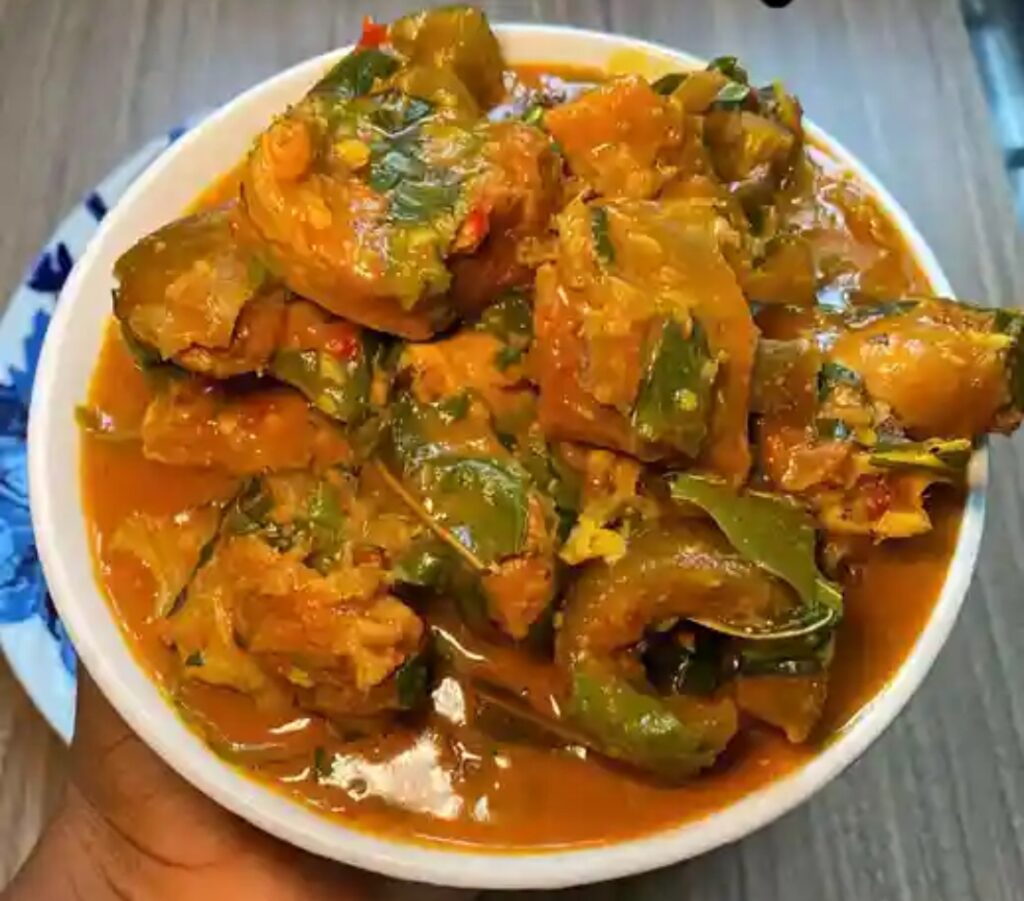
Oha soup (Ofe Oha / Ora soup) is a classic Igbo (southeastern Nigerian) soup made with tender oha leaves, thickened traditionally with cocoyam (ede), and enriched with assorted meats, stockfish, dry/smoked fish, palm oil, and crayfish. It has a rich, savory flavor and is typically eaten with swallows like pounded yam, fufu, eba, or semolina.
Here is a reliable, traditional-style recipe with meat (serves 4–6). Quantities are flexible—adjust to taste and what you have available.
Ingredients
Proteins (assorted for best flavor):
1–1.5 kg (2–3 lbs) assorted meats (beef, goat meat, shaki/tripe, ponmo/cow skin, etc.), cut into bite-sized pieces
1 cup stockfish pieces (pre-soaked in warm water until softened)
1 medium dry/smoked fish (cleaned, deboned if preferred)
Thickener & base:
6–10 medium cocoyam (ede) tubers (or ½–1 cup cocoyam paste/flour; alternatives: achi or ofo dissolved in water)
½–1 cup red palm oil (or palm fruit extract for a more traditional version)
Leaves & seasonings:
2–3 cups / 1 large bunch fresh oha leaves (washed; tear by hand—do not cut with a knife, as it darkens them and affects flavor)
Optional: handful of uziza leaves (sliced) for aroma
3–4 tbsp ground crayfish
1–2 tbsp ogiri Igbo (fermented locust bean paste—highly recommended for authentic depth)
1–2 scotch bonnet/habanero peppers (or to taste), blended or chopped
2–3 seasoning cubes (Maggi/Knorr)
Salt to taste
1 medium onion (optional, for cooking the meat)
Water or meat stock as needed (about 6–8 cups total)
Step-by-Step Method
Prepare the cocoyam thickener (do this while the meat cooks or ahead):
Wash the cocoyam and boil whole (skins on) in water until very soft (20–30 minutes—a fork should pierce easily). Peel while hot, then pound in a mortar/pestle or blend into a completely smooth, lump-free paste. (Tip: A little palm oil while pounding helps smoothness.) Set aside.
Shortcut: Use ready cocoyam paste/flour mixed into a smooth slurry with a little water or stock.
Cook the meats and stock:
Season the tougher meats (shaki, ponmo, etc.) with onion (if using), 1 seasoning cube, and a little salt. Add enough water to cover and cook until nearly tender. Add softer meats (beef/goat), the pre-soaked stockfish, and more water if needed. Continue cooking until all meats are tender and you have a flavorful stock (total 45–90 minutes depending on the cuts; pressure cooker speeds this up). Add the dry/smoked fish toward the end so it doesn’t break apart too much. Reserve the stock.
Build the soup:
To the pot of cooked meats and stock, add the palm oil, ground crayfish, blended/chopped peppers, remaining seasoning cubes, ogiri (dissolve it first if needed), and salt. Stir well and simmer for 5–10 minutes so the oil integrates and flavors develop.
Taste and adjust seasoning.
Thicken:
Add the cocoyam paste in small scoops or marble-sized balls, stirring continuously so it dissolves smoothly without lumps. Simmer 5–10 minutes until the soup thickens to your liking (it should be rich but not paste-like). Add a little hot water or stock if it becomes too thick.
Finish with the leaves:
Add uziza leaves first (if using) and cook 1 minute. Then gently stir in the hand-torn oha leaves. Cook only 1–3 minutes more—just until the leaves wilt but stay vibrant and slightly textured. Do not overcook. Turn off the heat.
Serving
Serve hot with pounded yam, fufu, eba, amala, or any preferred swallow. The soup thickens further as it cools; add a splash of water when reheating.
Tips for Best Results
Fresh oha leaves are key—look for them at African markets. Tear by hand only.
Cocoyam gives the classic smooth, slightly stretchy body; achi/ofo are acceptable substitutes if cocoyam is unavailable.
Ogiri and stockfish add authentic umami depth—don’t skip if possible.
Some versions use palm fruit extract instead of (or with) palm oil for richer color and flavor.
Make it milder or spicier by adjusting the peppers.
Leftovers keep well in the fridge (3–4 days) or freeze; the cocoyam will set, so loosen with water when reheating.